Elastomeric Absorbers & Noise Sheets

Foam Microwave Absorbers

Shielders & Absorbers

Shielders and absorbers cover specialized electromagnetic interference (EMI) and radio frequency interference (RFI) materials built to protect sensitive electronics, dampen cavity resonances, and ensure electromagnetic compatibility (EMC) in complex assemblies. This category currently centers on microwave absorbers, noise suppression sheets, and EMI shielding gaskets, high-performance materials used across aerospace, defense, telecommunications, medical, and advanced computing, and will expand to include additional thermal-EMI hybrid solutions over time.

While they address similar interference challenges, shielders and absorbers function differently. Shielding materials—such as conductive elastomers and fabric-over-foam gaskets—act as a barrier, reflecting electromagnetic waves and creating a Faraday cage around components. Absorbers, on the other hand, are engineered with magnetic or dielectric fillers that draw in high-frequency energy and convert it into minute, harmless amounts of heat, preventing waves from bouncing around inside a metallic enclosure and causing internal crosstalk.

From antenna cavity tuning and radar cross-section reduction to board-level noise suppression in mobile devices, these materials provide the exact electromagnetic manipulation required for reliable operation. Available in flexible elastomeric sheets, lightweight reticulated foams, castable resins, and machinable rigid blocks, they offer versatile integration into tightly packed electronic housings, waveguides, and outdoor radomes.

While shielders and absorbers manage unwanted electromagnetic energy, they are strictly designed for electrical and RF performance rather than mechanical fastening. For structural bonding of the enclosures that house these materials, explore the dedicated Structural Epoxy Adhesives category.
12 products

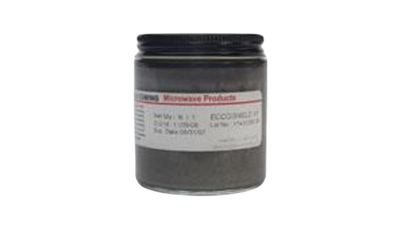
  • LAIRD ECCOSHIELD VY

    LAIRD ECCOSHIELD VY

    • Non-Hardening Conductive RF-Seam Compound
    • 0.001 ohm-cm Volume Resistivity
    • 40 to 288 deg C Service Range
  • ECCOSORB AN-77

    ECCOSORB AN-77

    • Carbon Loaded, Multilayer Absorber
    • Broadband Free Space Absorber
    • Low-Weight RF Absorber
  • LAIRD GDS

    LAIRD ECCOSORB GDS

    • Thin Conformable Construction
    • High-Frequency RF Attenuation
  • LAIRD JCP-PP9

    LAIRD JCP-PP9

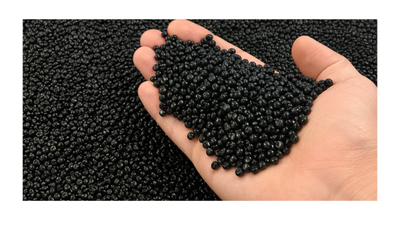
    • 60+ GHz Injection-Moldable Absorber
    • 76 to 81 GHz Automotive Radar Use
    • Polypropylene-Like Mechanical Integration
  • LAIRD LS-26

    LAIRD LS-26

    • High-Loss Microwave Absorption
    • Low-Density Urethane Foam
    • Very Flexible Absorber Foam
  • LAIRD MCS/SS6M

    LAIRD MCS/SS6M

    • 800 MHz to 6 GHz Absorption
    • Low-Outgassing Silicone Construction
    • Flexible Sheet with Optional PSA
  • LAIRD VY-81

    LAIRD VY-81

    • 80 to 90 dB EMI/RF Shielding
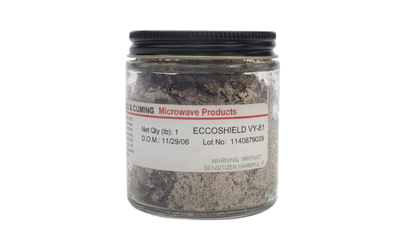
    • Non-Hardening High-Tack Shielding Compound
    • Conventional Caulking-Equipment Application
  • LAIRD LS-30

    LAIRD LS-30

    • Compliant Polyurethane Foam Format
    • RF Isolation and Insertion Loss
    • Cavity Resonance Suppression
  • LAIRD MF-117

    LAIRD MF-117

    • Machinable RF Component Stock
    • 2.8 to 119 dB/cm Attenuation
    • Sheets, Rods and Bars
  • LAIRD RFLB/SS6M

    LAIRD RFLB/SS6M

    • Adhesive-Backed 0.51 mm Sheet
    • 10 MHz to 4 GHz Control
    • Greater Than 50 dB/cm Attenuation
  • RESIN DESIGNS EMI-CSI-M3

    RESIN DESIGNS EMI-CSI-M3

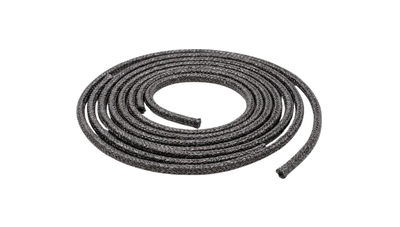
    • Combined EMI Shielding and Sealing
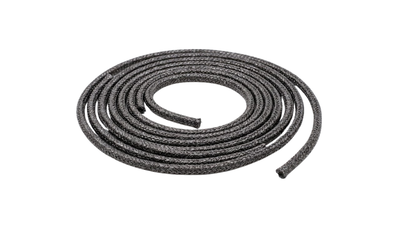
    • No-Mix Precured Rope Installation
    • -40 to 150 deg C Operation
  • RESIN DESIGNS EMI-CSI-M3-0125

    RESIN DESIGNS EMI-CSI-M3-0125

    • Defined 0.125 in Rope Format
    • 200 ft Spool Format
    • Combined EMI and Environmental Sealing

Product selector guide

How to select the right shielder or absorber?

For electromagnetic compliance and RF performance, select materials based on frequency requirements, available volume, and environmental exposure:

  • Foam Absorbers: Excellent for broadband absorption where space allows (radomes, test boxes).
  • Thin Elastomers & Sheets: Ideal for cavity resonance and near-field noise suppression in tight spaces (smartphones, dense PCBs).
  • Resonant Narrowband: Engineered specifically to target and eliminate a single, known frequency.
  • Machinable/Castable: Necessary when designing physical waveguide loads, terminations, or custom thermal-RF parts.


Shielders & Absorbers

Product Series Material Type Application Area Tuning / Range Form Factor Product Features Common Specifications
3M AB3000 Series EMI Absorber Device internal EMI reduction, electronics Broadband Flexible Sheet (PSA) High magnetic permeability, effective for near-field noise suppression Available in multiple thicknesses
3M AB7000E Series EMI Absorber High-frequency noise suppression (up to 6GHz) Broadband Flexible Sheet (PSA) Halogen-free formulation, excellent absorption for mobile devices AB7010E, AB7020E, AB7030E
3M AB8000 Series EMI Absorber Mobile device and WiFi EMI reduction Broadband Flexible Sheet (PSA) Ultra-thin, lightweight, flexible near-field absorber AB8010, AB8020, AB8030
Laird Eccosorb AN Foam Absorber Antenna test ranges, radar housings Broadband Lightweight Foam Flexible polyurethane foam, absorbs energy across a wide frequency spectrum AN-77, PSA available
Laird Eccosorb BSR Elastomeric Absorber Cavity resonance reduction in microwave modules Broadband Thin Elastomer (PSA) High-loss silicone elastomer, environmentally rugged BSR-1, SS6M adhesive options
Laird CF Series Conductive Foam Board level shielding, enclosure gaps Shielding Gasket / Pad Provides reliable EMI shielding and grounding with low compression CF710
Laird Eccosorb GDS Elastomeric Absorber High frequency cavity damping (≥18 GHz) Broadband Thin Elastomer (PSA) Silicone rubber matrix, high loss at higher millimeter-wave frequencies -
Laird Eccostock HiK High-K Dielectric Antenna lenses, dielectric matching Dielectric Config. Machinable Block Low loss, adjusted dielectric constant material for RF manipulation HiK500
Laird Eccosorb JCP Castable Absorber Custom molded cavity fillers, terminations Broadband Liquid / Resin Two-part castable system for creating intricate, high-loss custom shapes JCP-PP9
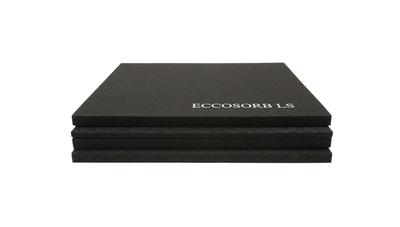
Laird Eccosorb LS Lossy Foam Absorber Waveguide loads, antenna shrouds Broadband Foam Sheet Gradient or uniform lossy foam, low density with high attenuation LS-26, LS-30, SS3 options
Laird Eccosorb MCS Elastomeric Absorber Surface current reduction (8-18 GHz) Broadband Thin Elastomer (PSA) Thin, high-loss silicone designed for creeping wave attenuation MCS / SS6M
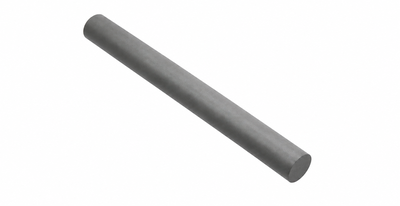
Laird Eccosorb MF / MFS Machinable Absorber Waveguide terminations, attenuators, dummy loads Broadband Rigid Block / Rod MF is a rigid, highly machinable load material; MFS is a silicone variant MF-117, MFS-124
Laird NS1000 Series Noise Suppression Near-field EMI reduction in consumer electronics Broadband Flexible Sheet (PSA) Ultra-thin magnetic sheet, high permeability for tracing/chip level noise NS1000, NS1000C
Laird FoF Gaskets Fabric-over-Foam Enclosure seams, doors, I/O panels Broadband Shield Profiled Gasket (PSA) High conductivity metalized fabric over soft foam core, low compression force PA51G, PA51H, AB51K, ABH1K
Laird Eccosorb RF / RF-RET Reticulated Foam Ventilation panels, radomes Broadband Open-Cell Foam Open-cell, lightweight polyurethane foam, allows airflow while absorbing RF RFLB, RFRET-0
Laird Eccosorb SF Narrowband Absorber Radar cross-section reduction, specific frequency tuning Narrowband (Resonant) Elastomer Sheet Tuned to suppress a specific discrete frequency (e.g., 4.5, 5.5, 6.0 GHz) SF-4.5, SF-5.5, SF-6.0, SF-7.0
Laird Eccosorb VY Castable Absorber Custom shaped waveguide loads, molded terminations Broadband Liquid / Resin Two-part moldable load material, high loss characteristics VY-81, VY400GRAM, VY1KG

Frequently asked questions

Frequently Asked Questions about Shielders & Absorbers

What is the difference between an EMI shield and an absorber?

An EMI shield (like a metalized gasket or conductive coating) acts like a mirror to electromagnetic waves; it reflects the energy away to protect the interior or keep noise contained. An absorber acts like a sponge; it draws the electromagnetic wave in and dissipates the energy as a tiny amount of heat, preventing the wave from reflecting around inside an enclosure and causing internal interference.

How does a microwave absorber turn RF into heat?

Absorbers are formulated with a base polymer (silicone, foam, epoxy) that is heavily loaded with magnetic or dielectric fillers, such as carbonyl iron or ferrite powders. When an RF wave enters the material, its alternating magnetic field rapidly shifts the magnetic domains of the iron particles. This constant shifting creates molecular friction, which converts the RF wave's energy into thermal energy.

Should I use a broadband or narrowband absorber?

Use a broadband absorber (like Eccosorb LS or MCS) if your enclosure is suffering from general cavity resonance, crosstalk, or noise spanning across multiple frequencies. Use a narrowband resonant absorber (like Eccosorb SF) if you need incredibly high attenuation at one very specific, known frequency—such as silencing a specific radar band. Narrowband absorbers must be precisely ordered for that specific target frequency.

How are elastomeric absorbers and noise sheets attached?

Most thin elastomeric absorbers and noise suppression sheets (like the 3M AB series or Laird Eccosorb sheet materials) are supplied with a pre-applied Pressure Sensitive Adhesive (PSA) on one side. This allows operators to easily peel the liner and stick the absorber directly onto metal chassis walls, PCB shields, or flex cables without the need for additional liquid adhesives or mechanical fasteners.


Learn more

Understanding EMI Shielding & Microwave Absorbers

Electromagnetic materials engineered to reflect, attenuate, and manage high-frequency noise for EMC compliance

Attenuation
Reflection

What Are Shielders & Absorbers?

EMI shielders and microwave absorbers are specialized composites made by loading a base matrix—such as silicone elastomer, polyurethane foam, or rigid epoxy—with conductive, magnetic, or dielectric fillers. They are engineered to solve high-frequency electromagnetic interference problems ranging from kilohertz (kHz) noise up to millimeter-wave (GHz) frequencies.

Shielding gaskets utilize highly conductive outer layers (like metalized fabrics) to bridge the gap between two metal surfaces, reflecting EMI away and maintaining electrical continuity across an enclosure seam. Microwave absorbers, conversely, use loaded iron, ferrite, or carbon particles to absorb the magnetic or electrical field components of an RF wave, converting the interference into trace amounts of heat.

By combining reflection (shielding) to keep noise out, and attenuation (absorbing) to quiet noise generated internally, engineers can ensure sensitive electronics pass stringent EMC/EMI regulatory testing and perform reliably in the field.

Electromagnetic Material – Key Characteristics
Targeted Frequency Control

Available in broadband formulations to absorb a wide range of frequencies, or resonant narrowband formulations tuned to suppress a single specific frequency.

Cavity Resonance Damping

Absorbers prevent RF energy from reflecting off the inside of metal housings, which can cause amplification, crosstalk, and component failure.

Environmental Resilience

Elastomeric and closed-cell foam options provide simultaneous protection against moisture, dust, high temperatures, and outdoor weathering.


Types of Shielders & Absorbers

Different physical formats accommodate varying space constraints and frequency targets

 
Elastomers & Sheets Absorbers

1. Elastomeric Absorbers & Noise Sheets

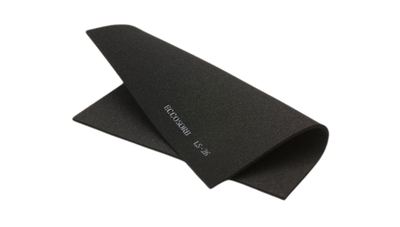
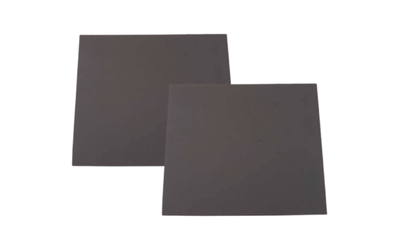
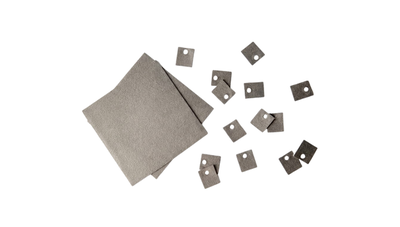
Thin, flexible sheets loaded with magnetic particles (like silicone-based Eccosorb or acrylic-based 3M AB series). Designed to be applied directly onto noisy chips, flex cables, or the interior walls of small enclosures.

They offer high attenuation in tight spaces and are typically supplied with a peel-and-stick pressure-sensitive adhesive (PSA) for rapid assembly.

 
Foams Broadband

2. Foam Microwave Absorbers

Lightweight open-cell or closed-cell polyurethane foams loaded with carbon. Because they are thicker, they are highly effective at absorbing broadband energy, especially at lower frequencies where longer wavelengths dictate thicker materials.

Commonly used in antenna shrouds, test boxes, radomes, and areas where weight is a primary concern.

 
Machinable & Castable Loads

3. Machinable & Castable Absorbers

Rigid blocks (like Eccosorb MF) that can be machined on a lathe or mill, or two-part liquid systems (like Eccosorb VY) that can be poured and cast into complex molds.

These are utilized to create custom-shaped waveguide loads, attenuators, and structural parts that require excellent thermal conductivity to handle high-power RF environments.

 
Fabric-over-Foam Gaskets

4. EMI Shielding Gaskets

Consisting of a highly conductive metalized fabric wrapped around a soft foam core, Fabric-over-Foam (FoF) gaskets provide high EMI shielding effectiveness while requiring very low compression force.

Used to seal doors, access panels, and I/O plates, ensuring that electromagnetic noise cannot leak in or out of the chassis seams.


The Attenuation Mechanism

How absorbers eliminate internal interference

Phase 1

Wave Entry

An electromagnetic wave strikes the surface of the absorber. The material is formulated with a specific impedance designed to match the incoming wave, minimizing immediate surface reflection.

Phase 2

Energy Conversion

As the wave travels through the material, magnetic and dielectric fillers (like carbonyl iron or ferrite) interact with the wave's field. The friction at the molecular level converts the RF energy into a tiny amount of thermal energy.

Phase 3

Dissipation

The resulting heat safely dissipates into the surrounding structure or air. The RF wave is heavily attenuated, eliminating the risk of it reflecting and interfering with neighboring components.

Core Industrial Applications

Electromagnetic materials are deployed wherever RF reliability and signal integrity are paramount

Industry Application
Telecommunications / 5G Antenna side-lobe reduction, radome integration, reducing internal cavity resonance in high-frequency transceiver modules.
Aerospace & Defense Radar cross-section (RCS) reduction, custom waveguide loads, protecting avionics from harsh external RF environments.
Consumer Electronics Noise suppression sheets on flexible printed circuits (FPCs), microprocessors, and cameras to prevent internal crosstalk in smartphones and laptops.
Automotive Shielding ADAS sensors, radar modules, and infotainment systems against electromagnetic interference from high-voltage EV drivetrains.
 

Narrowband vs Broadband Absorbers

Understanding the difference in frequency tuning requirements

Property Broadband Absorbers (e.g. LS, MCS) Narrowband / Resonant (e.g. SF)
Frequency Range Effective across a wide spectrum (e.g., 2 GHz to 18+ GHz) Highly effective at one specific discrete frequency (e.g., exactly 5.5 GHz)
Thickness Often thicker (foams) or relies on surface current damping (thin elastomers) Thickness is mathematically calculated exactly to 1/4 wavelength of the target frequency
Primary Use Case General cavity resonance reduction, lowering overall system noise Eliminating a known, problematic discrete signal (like a specific radar band)

Leading Brands Trust in Our Products and Services

  • Jabil
  • Linxens
  • Magna
  • Medtronic
  • NXP
  • Philips
  • Semikron
  • Teledyne
  • Thales
  • Vishay
  • ZF
  • AMS
  • Apple
  • Audi
  • Broadcom
  • Borgwarner
  • Bosch
  • Eaton
  • Henkel
  • Honeywell
  • Hysol
  • Intel
Products that Perform|Knowledge that Serves|Service that Delivers