Amines

Metallic salts

Accelerators

Adhesive accelerators and activators cover specialized surface chemistries built to optimize and speed up the curing process of various adhesive systems, including cyanoacrylates, anaerobics, and structural acrylics. This category currently centers on adhesive accelerators, activators, and adhesion promoters, high-performance chemical catalysts used across aerospace, electronics, automotive, and industrial manufacturing to ensure reliable bonds under less-than-ideal conditions, and will expand to include additional surface preparation chemistries over time.

Accelerators and activators prepare surfaces and catalyze chemical reactions to produce fast, durable bonds. Unlike the adhesives themselves which provide the structural hold, these supplementary products are designed to overcome challenging bonding environments—such as inactive metal surfaces, large gaps, cold temperatures, or exceptionally dry ambient conditions. Their chemical formulations deliver rapid curing without sacrificing bond strength, making them well suited to high-speed production lines and critical aerospace assemblies.

From electronic component tacking and wire tacking to aerospace structural bonding and threadlocking on passive metals, adhesive accelerators provide the chemical jumpstart where processing speed and reliable adhesion are critical. Available in aerosol, pump spray, and brushable liquid formulations, they offer precise application onto metals, plastics, composites, and engineered substrates while maintaining the integrity of the final structural or sealant bond.

While accelerators and activators provide fast curing and surface preparation, they are designed to be used in conjunction with a primary adhesive or sealant rather than acting as a standalone bonding agent. For high-strength permanent bonding, explore the dedicated Structural Epoxy Adhesives category.
12 products

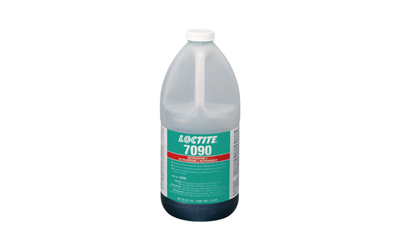
  • LOCTITE SF7090

    LOCTITE SF7090

    • Accelerates Cure of Loctite Anaerobic Adhesives
    • Solvent-Free Bonding Formulation
    • Passive Metals and Inert Materials
  • LOCTITE SF712

    LOCTITE SF712

    • Loctite SF712 | Cyanoacrylate Adhesive Activator
    • Fast Assembly Fixturing
    • Low-Viscosity Bonding Flow
  • LOCTITE SF7452

    LOCTITE SF7452

    • Cyanoacrylate Adhesive Cure Accelerator
    • Fast Assembly Fixturing
    • Low-Viscosity Bonding Flow
  • LORD ACCELERATOR 19GB

    LORD ACCELERATOR 19GB

    • Integrated 0.01 in (0.025 cm) Glass Beads
    • Room-Temperature Curing Paste Material
    • Non-Flammable Application Formulation
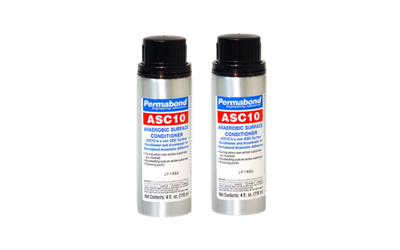
  • PERMABOND ASC10

    PERMABOND ASC10

    • Anaerobic Cure on Passive Surfaces
    • Fast-Evaporating Non-Halogenated Surface Conditioner
    • Up to 30-Day Surface Activation
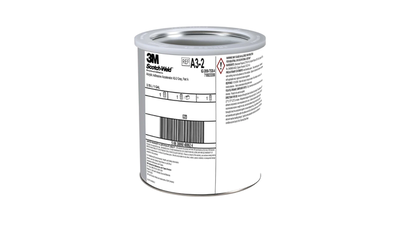
  • 3M A3-2

    3M A3-2

    • Fast Handling Strength Development
    • Controlled Non Sag Placement
    • Oily Surface Process Tolerance
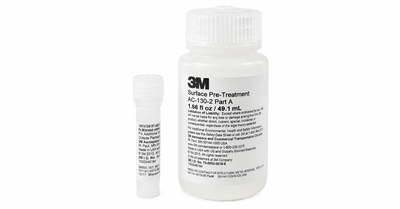
  • 3M AC-130-2

    3M AC-130-2

    • Non Chromated Metal Preparation
    • Ambient Dry Process
    • Brush Spray Or Immersion Application
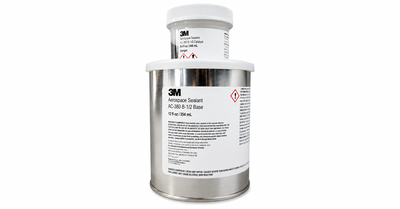
  • 3M AC-380

    3M AC-380

    • Fuel Tank Sealing Performance
    • Thixotropic Application Control
    • Selectable Assembly Work Life
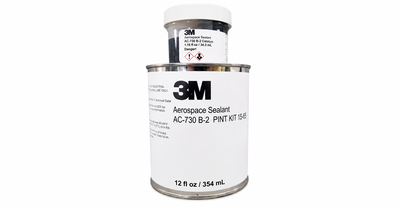
  • 3M AC-730

    3M AC-730

    • Non Chromated Corrosion Inhibition
    • Flowable And Thixotropic Options
    • Selectable Application Life Grades
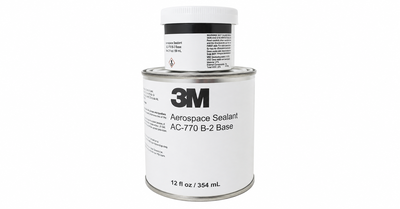
  • 3M AC-770-B-2-3

    3M AC-770-B-2-3

    • Low Density Fuselage Sealing
    • Controlled Thixotropic Placement
    • Extended Class B Work Life
  • LOCTITE SF7471

    LOCTITE SF7471

    • Fast 30-70 Second Drying
    • Low-Temperature Cure Acceleration
    • Seven-Day On-Part Life
  • LOCTITE SF7649

    LOCTITE SF7649

    • Thirty-Day On-Part Life
    • Low-Temperature Cure Acceleration
    • Brush, Spray, or Pre-Applied Use

Product selector guide

How to select the right accelerator or surface treatment?

For industrial bonding applications, select accelerators and activators based on the primary adhesive chemistry, substrate activity, and cosmetic requirements:

  • Isopropanol Base: Preferred for plastics and sensitive substrates to prevent stress cracking or melting.
  • Acetone Base: Extremely fast evaporation for high-speed automated lines; may attack some plastics.
  • Heptane Base: Provides excellent on-part life (the active ingredient stays viable on the part for longer periods) and is generally plastics-safe.
  • Pre- vs Post-Application: Ensure the accelerator is designed for how you plan to use it—some can be sprayed directly over uncured adhesive fillets, while others must be applied to the substrate first.


Adhesive Accelerators, Activators & Promoters

Product RTU Type Application Area Chemistry / Base Application Method Associated Adhesive Color Product Features Specifications
LOCTITE SF712 1K Cyanoacrylate curing, wire tacking Isopropanol Spray / Liquid Cyanoacrylates Clear Plastics-safe, reduces cosmetic blooming, fast fixture time MIL-A-46050C
LOCTITE SF7452 1K Rapid cyanoacrylate curing Acetone Spray / Liquid Cyanoacrylates Clear Extremely fast flash-off and curing, suitable for post-application MIL-A-46050C
LORD ACCELERATOR 19GB 2K (Part B) Structural bonding, metals and plastics Acrylic paste Mix / Extrusion LORD 200 Series Acrylics Grey Macrobond technology, cures at room temp, mix-in accelerator -
PERMABOND ASC10 1K Anaerobic activation, inactive metals Solvent blend Spray / Brush Anaerobic Adhesives Green Surface conditioner for threadlockers and retaining compounds -
3M A3-2 1K Adhesion promotion, aerospace applications Solvent prep Brush / Wipe Structural Adhesives Clear/Amber Improves bond strength on difficult substrates -
3M AC-130-2 2-Part Kit Surface prep for aerospace metal bonding Sol-Gel Brush / Spray Epoxies, Urethanes Clear High-performance non-chromate sol-gel surface preparation Boeing BAC 5010
BAC 5884
3M AC-131 2-Part Kit Aerospace metal surface preparation Sol-Gel Brush / Spray Structural Adhesives Clear Non-chromate CBAM (critical bonded aluminum metal) preparation AMS3095
Boeing BAC 5010
3M AC-131Archived 2-Part Kit Legacy aerospace metal surface preparation Sol-Gel Brush / Spray Structural Adhesives Clear Archived sol-gel formulation for critical aerospace bonding -
3M AC-132 1K Adhesion promoter for aerospace sealants Solvent blend Brush / Wipe Polysulfide Sealants Red Enhances adhesion of polysulfide sealants to various substrates AMS3100
3M AC-380 2K Aerospace sealing (Class B type) Polysulfide Base Extrusion Integrated Sealant Dark Gray Formulated system associated with rapid cure profiles AMS3276
3M AC-730 1K Aerospace sealing, tooling, adhesion promoter Solvent blend Wipe / Brush Sealants & Adhesives Clear/Amber Adhesion optimization prior to sealant application -
3M AC-735 1K Aerospace adhesion promoter Solvent blend Wipe / Brush Aerospace Sealants Clear Improves adhesion properties on diverse aircraft substrates -
3M AC-770-B-2-3 2K Low density aerospace sealing Polysulfide Base Extrusion Integrated Sealant Gray Class B, low density sealant associated with specific primer requirements AMS3281
3M AC-79 1K Adhesion promoter for difficult substrates Solvent blend Wipe / Brush Aerospace Sealants Amber Maximizes the bond of aerospace sealants to specialized metals/composites -
LOCTITE SF 7471 1K Anaerobic activation, low temp cure Acetone / IPA Spray / Liquid Anaerobic Adhesives Yellow / Amber For inactive metals or cold environment curing, excellent on-part life MIL-S-22473E
LOCTITE SF 7649 1K Anaerobic activation, fast cure Acetone Spray / Liquid Anaerobic Adhesives Green Solvent-based, highly aggressive activator for maximum cure speed MIL-S-22473E

Frequently asked questions

Frequently Asked Questions about Adhesive Accelerators

What is an adhesive accelerator used for?

Adhesive accelerators are used to significantly decrease the cure time of specific adhesives, most notably cyanoacrylates (super glues). They are essential for applications requiring instant fixture, curing large volumes of adhesive in wide gaps, securing wire tacks in electronics, and preventing the white cosmetic frosting (blooming) that can occur during normal cyanoacrylate curing.

Do I always need an activator for threadlockers?

No, standard threadlockers do not require an activator when applied to active metals like brass, copper, bronze, or standard iron/steel. However, an anaerobic activator is highly recommended—and often required—when bonding inactive surfaces such as stainless steel, anodized aluminum, titanium, galvanized metals, or plastics, and when curing at temperatures below 15°C (59°F).

How long do I need to wait after applying an accelerator?

Accelerators and activators rely on a solvent carrier (like acetone, heptane, or isopropanol) to deliver the active chemistry. You must wait for this solvent to completely evaporate before applying the adhesive, which typically takes between 30 seconds and 2 minutes depending on ambient temperature, airflow, and the specific solvent base. Applying adhesive while the solvent is still wet can severely compromise bond strength.

Can I use an accelerator as an adhesion promoter?

Generally, no. Accelerators and activators are designed to manipulate the curing speed and mechanism of the adhesive, whereas true primers and adhesion promoters (like aerospace sol-gels or polysulfide primers) act as a chemical bridge to increase the actual bond strength between the substrate and the adhesive. Ensure you are matching the correct surface treatment to the specific adhesive and substrate.


Learn more

Understanding Adhesive Accelerators & Activators

Surface and catalyst technology engineered for rapid curing, enhanced gap filling, and reliable adhesion on inactive surfaces

Cure Catalyst
Surface Treatment

What Are Adhesive Accelerators?

Adhesive accelerators and activators are formulated chemical catalysts based in a volatile solvent carrier. They are engineered for applications requiring rapid fixture times, bonding on inactive surfaces (like stainless steel or plastics), and curing through large gaps.

Unlike the structural adhesive itself, which relies on moisture, metal ions, or mixing to cure, accelerators contain active amines, metallic salts, or sol-gel chemistries that instantly initiate or speed up the polymerization process of the primary adhesive.

During application, the solvent carrier rapidly evaporates, leaving behind a microscopic layer of active catalyst that reacts with the adhesive to form a rapid, durable bond network.

Accelerator Technology – Key Characteristics
Rapid Fixture Times

Dramatically reduces the cure time of cyanoacrylates and anaerobics from minutes or hours down to seconds.

Inactive Surface Bonding

Provides the necessary chemical ions to cure anaerobic adhesives on passive metals like stainless steel, aluminum, and plated parts.

Enhanced Gap Filling

Ensures complete adhesive curing even in large gaps or areas where normal environmental moisture or metal contact is lacking.


Types of Adhesive Accelerators & Activators

Different formulations provide different processing methods, tailored to the specific adhesive chemistry

 
CA Accelerators Instant Adhesives

1. Cyanoacrylate (CA) Accelerators

Cyanoacrylate accelerators are amine-based solutions typically formulated in acetone, heptane, or isopropanol solvents. They are used to dramatically speed up the fixture time of instant adhesives.

These are essential for wire tacking, bonding porous materials, minimizing cosmetic blooming (frosting), and curing excess adhesive squeezed out of the joint.

 
Anaerobic Activators Threadlockers & Retaining

2. Anaerobic Activators

Anaerobic activators provide the active metal ions needed to cure threadlockers, sealants, and retaining compounds. They are applied when bonding "inactive" metals (like stainless steel, zinc, and anodized aluminum) or non-metals.

They are also highly recommended when curing anaerobics in unusually cold environments where the chemical reaction would otherwise stall.

Accelerator Application Formats
 
Aerosol & Pump Sprayable

3. Sprayable Accelerators

Spray formulations offer a fine, misted application over parts, ideal for large surface areas or for "post-applying" over exposed cyanoacrylate fillets to instantly freeze them in place.

The aerosol delivery method ensures highly uniform coverage of the active catalyst while minimizing the amount of solvent applied to sensitive plastics.

Typical Uses:

Wire tacking, cosmetic bonding, large gap fills, and rapid fixture on automated production lines.

 
Liquid Wipe Brush-On

4. Liquid / Brush-On Activators

Liquid activators and aerospace adhesion promoters are applied via brush, swab, or clean wipe directly to the mating surfaces prior to adhesive application.

They are designed for precision pre-treatment, ensuring the catalyst or sol-gel layer is intimately bonded to the substrate before the structural adhesive or aerospace sealant is applied.

Typical Uses:

Threadlocker activation on fasteners, structural aerospace sol-gel surface preps, and polysulfide adhesion promotion.


The Catalyst Mechanism

How accelerators and activators interact with the surface and adhesive

Stage 1

Application & Evaporation

The activator is applied to the surface. The volatile solvent carrier (acetone, heptane, or isopropanol) quickly wets out the substrate and begins to rapidly evaporate, usually within seconds to a few minutes.

Stage 2

Catalyst Deposition

Once the solvent flashes off, a microscopic, highly active chemical layer remains deposited on the surface. This layer effectively "primes" inactive metals or neutralizes acidic surfaces that might inhibit curing.

Stage 3

Accelerated Polymerization

When the adhesive is applied and comes into contact with the deposited catalyst, the chemical reaction is instantly forced forward. The adhesive polymerizes rapidly, drastically cutting fixture and full cure times.

Key Performance Benefits

Why accelerators and surface treatments are utilized in critical manufacturing environments


1. Dramatic Speed Increases

Fixture Speed: Reduces standard cyanoacrylate and anaerobic fixture times to seconds, eliminating the need for complex clamping or long production line hold times.

Environmental Independence: Ensures predictable curing speeds even when temperatures drop or humidity levels fluctuate heavily.


2. Gap & Fillet Curing

Through-Cure: Ensures adhesives cure correctly even when gaps exceed normal specifications, where lack of moisture or metal contact would otherwise stall the reaction.

Excess Adhesive: Safely and cleanly cures "squeeze out" fillets of adhesive around joints.


3. Inactive Surface Bonding

Passive Metals: Enables structural bonding and threadlocking on stainless steel, zinc, anodized aluminum, and passivated metals.

Plastics & Porous Materials: Overcomes the acidity of wood, paper, and certain plastics that naturally slow down cyanoacrylate reactions.


4. Minimized Cosmetic Defects

Blooming Control: By flashing the adhesive rapidly, accelerators prevent cyanoacrylate monomers from volatilizing and settling as white "frost" or blooming on surrounding cosmetic surfaces.


Core Industrial Applications

Accelerators are selected where assembly speed and dependable bonding are critical

Industry Application
Aerospace & Aviation Surface preparation (sol-gel) for primary structural bonding, rapid fixture of interior trims, and adhesion promoters for aviation fuel tank sealants.
Electronics & PCB Wire tacking, component staking, strain relief potting, and rapid fixation of delicate assemblies where heat curing is not possible.
Automotive Manufacturing Threadlocker activation on passive fasteners, rapid bonding of interior trim plastics, and weatherstrip adhesion.
General Assembly Bonding porous materials (wood, foam), filling large gaps, and accelerating structural acrylics in heavy manufacturing.
 

Accelerator vs Activator vs Primer

Understanding the functional differences across surface treatments. Actual performance varies by specific chemistry.

Property Accelerators Activators Primers / Adhesion Promoters
Primary Function Speed up fixture/cure times Enable cure on inactive surfaces Improve chemical bond strength
Associated Adhesives Cyanoacrylates, Structural Acrylics Anaerobic Threadlockers & Sealants Epoxies, Polyurethanes, Polysulfides
Application Timing Pre-applied or Post-applied Strictly Pre-applied Strictly Pre-applied

Leading Brands Trust in Our Products and Services

  • Jabil
  • Linxens
  • Magna
  • Medtronic
  • NXP
  • Philips
  • Semikron
  • Teledyne
  • Thales
  • Vishay
  • ZF
  • AMS
  • Apple
  • Audi
  • Broadcom
  • Borgwarner
  • Bosch
  • Eaton
  • Henkel
  • Honeywell
  • Hysol
  • Intel
Products that Perform|Knowledge that Serves|Service that Delivers